
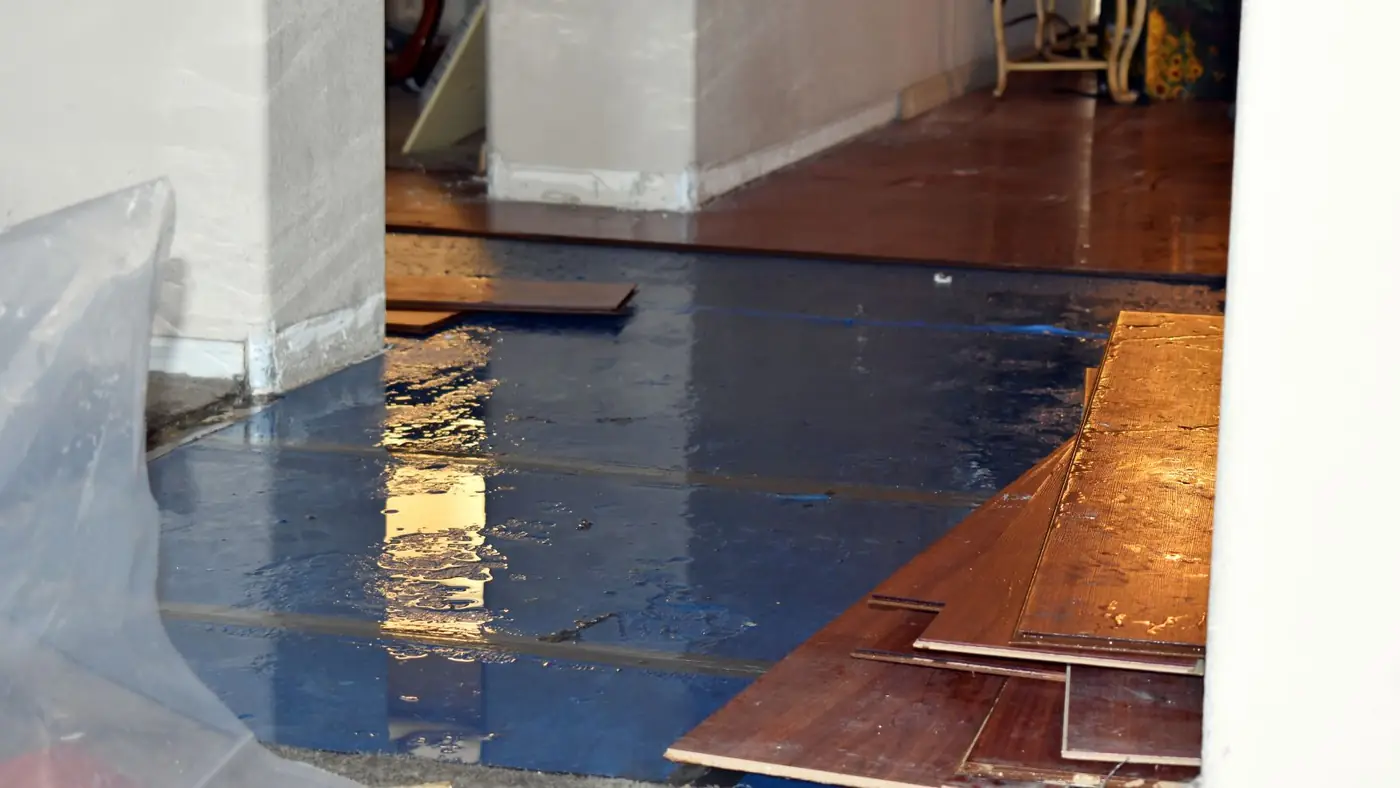
Cupping, crowning and buckling are three different ways a hardwood floor reacts to moisture, and telling them apart in Broomfield, CO decides whether the floor gets dried, sanded or pulled up. Cupping means the board edges sit higher than the center. Crowning is the opposite, with the center higher than the edges. Buckling means boards have lifted off the subfloor.
Short answer: cupped floors can often be dried and flattened, crowned floors usually need more drying before any sanding, and buckled floors often need boards replaced. A moisture meter reading on the wood and the subfloor makes the call, not the look of the floor alone.
CompareCupping, Crowning and Buckling Side by Side
| Condition | What you see | Usual cause | Typical path |
|---|---|---|---|
| Cupping | Board edges raised, centers lower, rows that look like shallow troughs | Moisture reaching the underside of the board, such as a leaking dishwasher line or a damp subfloor | Stop the source, dry slowly, wait for readings to settle, then decide on sanding |
| Crowning | Board centers raised, edges lower | Often follows a cupped floor that was sanded before it finished drying, or surface water that soaked in from above | More drying and monitoring, then a careful sand if readings allow |
| Buckling | Boards lifting off the subfloor, sometimes in a ridge or tent | Heavy or prolonged wetting that swells the boards past what the nails and glue can hold | Dry the area, check the subfloor, then replace the lifted boards in most cases |
These are general patterns. Species, board width and finish change how a floor behaves.
What to Do in the First Day
The early hours decide how much movement the boards will show later. Water that sits on or under a floor keeps working on it. These actions help whether the leak was small or large.
Shut off the source
Close the valve at the appliance or the main shutoff, then confirm the water has stopped.
Photograph the floor
Take wide and close photos before anything is moved, since your insurer may ask what the floor looked like.
Lift what you can
Rugs, mats and furniture legs trap moisture against the finish, so move them off the wet area.
Ventilate lightly
Run the home's normal heating or cooling and avoid blasting heat at the boards, which can crack them.
Why Wet Boards Change Shape
Solid wood takes on moisture and swells, then gives that moisture back slowly as it dries. When the underside of a board stays wetter than the top, the bottom face swells more and the edges rise. That is cupping, and a dishwasher line or damp subfloor is a classic source because the water reaches the boards from below, often out of sight.
Engineered flooring has layers, so it can react differently from solid planks. The species, the width of the boards and the finish all change how much a floor moves. A flooring professional or the manufacturer's literature can tell you what you have.
Subfloor type matters as well. Boards over a crawl space, a slab or plywood pick up and release moisture differently, which is why a reading on the surface alone can mislead. We measure both layers before suggesting a path.
How Controlled Drying Works
Controlled drying means removing moisture at a pace the wood can tolerate. Push a floor too hard and boards can split or the finish can crack, so the aim is steady and measured, not fast.
Stop the source
A shut valve or a repaired line comes first, because drying a floor that is still being wetted gets nowhere.
Map the moisture
Moisture meters and thermal imaging show which boards and which stretch of subfloor hold water.
Dry gently
Air movers and LGR dehumidifiers pull moisture out of the air and the wood while the room stays closed up.
Re-measure
Readings are taken again on the same spots so you can see the numbers fall, not guess.
Decide
Once readings level off, the floor either relaxes, needs sanding or needs boards replaced.
Floor edges starting to rise?
Call and describe what you see. We will explain the scope and price before any work starts.
How Long to Wait Before Sanding
There is no calendar answer, because wet floors dry at their own pace. The signal to sand is a set of readings, not a date. Boards should read close to unaffected boards in a dry part of the house, and the subfloor should read dry too, with numbers holding steady across several visits.
A sander brought in too soon is a common way for a recoverable cupped floor to turn into a crowned one. The sander flattens boards that are still swollen, then the edges shrink as the wood finishes drying. Ask for the moisture readings and the dates they were taken before anyone brings in a sander.
Broomfield note: Know Your Own Shutoffs
The City and County of Broomfield Water Utilities and Services Department runs drinking water, wastewater and stormwater. It does not run the plumbing inside your house, so a dishwasher supply line, an ice-maker line or a washer hose is yours to control. Find those shutoff valves under the sink and behind appliances now, and tell everyone in the house where they are.
Snow season in the Denver and Boulder area is long, per NWS data, and wet boots and melting snow at entry doors can feed moisture into floors for months, so keep mats down and wipe puddles up between October and April.
The city's water page also lists an after-hours emergency line for urgent problems on its own system, so keep that number next to your own shutoff map.
Water near outlets or panels
Water at outlets, appliances or a breaker panel means staying out and ringing the utility or 911 about electrical or gas risk before ringing us. Floors can wait. People cannot.
Refinish, Replace or Keep Watching
- Keep watching when readings are still falling and the boards are changing shape from week to week.
- Sand and refinish when readings are dry and steady and the floor has settled flat or nearly flat.
- Replace boards when they are buckled, split, or the finish has separated from the wood.
- Check the subfloor whenever boards come up, since wet plywood or slab-side moisture can bring the problem back.
Whichever path fits, ask for the plan and the readings in plain terms. A good scope names the boards involved, the drying steps and the point at which the floor is judged ready. If the answer is vague, ask again before work begins.
We dry and monitor the floor, and our repair crews handle board replacement and refinishing once readings allow. A leaking line needs a plumber, which is not our trade. For standing water we offer emergency water removal, and we take calls from Lafayette and Louisville as well as Broomfield, CO.
Often it can, if the source is stopped and the boards dry slowly. Some floors relax on their own and others need a light sand afterward. Readings tell you which, and patience early on saves boards later.
Not necessarily. Crowning often means the boards were sanded or dried unevenly, and more drying plus a careful sand can correct it. A flooring professional should look at the thickness left in the boards first.
A burst supply line is more often covered than a slow leak, but wording differs by policy, so ask your insurer how it would treat your loss. Photograph the floor before anything is removed.
No. The city's water utilities department runs the drinking water, wastewater and stormwater systems, not the plumbing inside a home. Find your own shutoffs, and use the city's after-hours line only for urgent problems with the city system.
Rarely. Once boards have lifted, the fasteners and glue bond have usually failed. Dry the area first, then plan on replacing the affected boards.
Water or mold in your home right now?
Call the 24/7 line and describe what you see. We explain scope and price before work starts.