
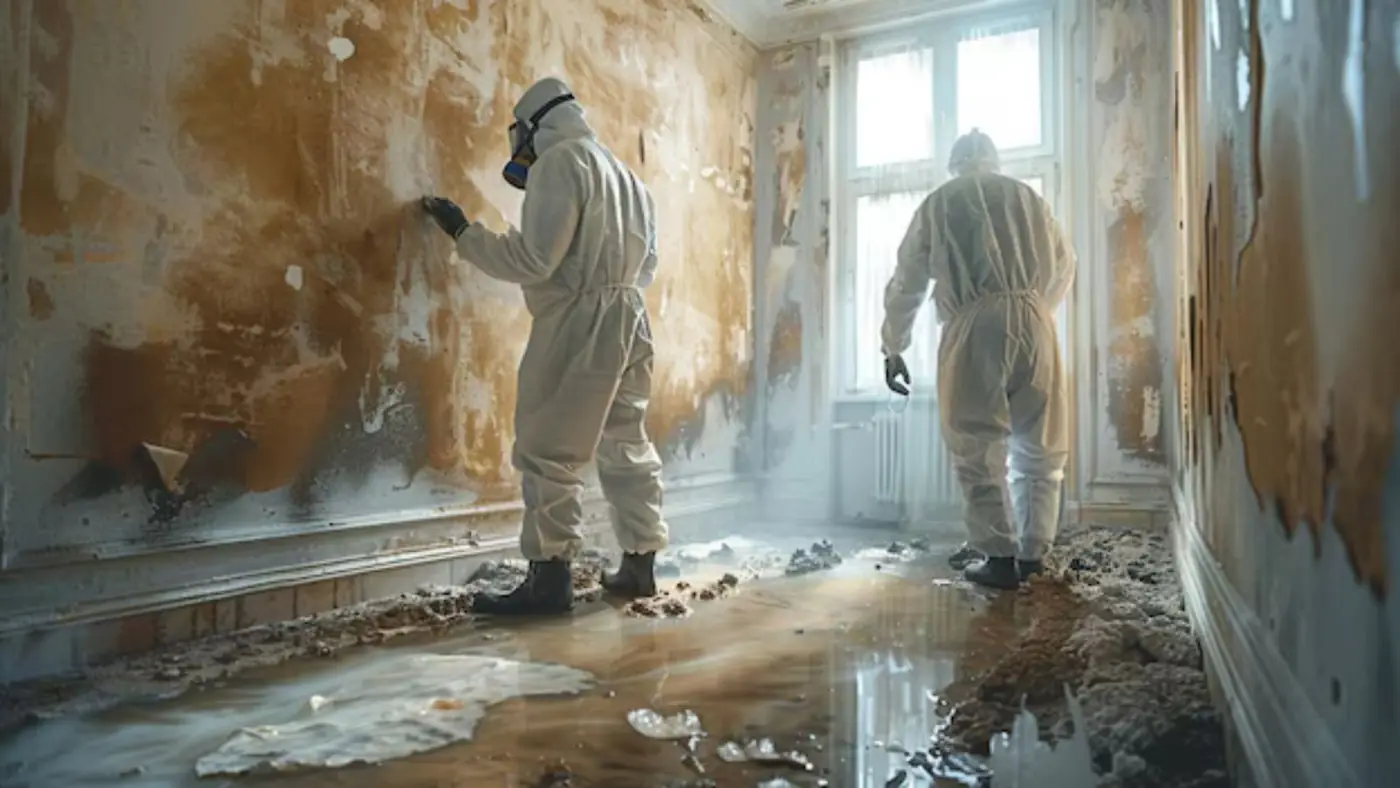
Mold after water damage in Broomfield, CO begins when building materials stay wet long enough for spores that are already in the air to settle and grow. Mold exists both inside and outside homes, as the CDC points out. So the question after any leak is not whether spores exist, but whether the wet materials get dry.
The short answer
Mold needs ongoing moisture. Remove the water, dry the structure fully, and the conditions it needs go away.
- Stop the source first, then remove standing water.
- Open up or measure hidden spots, since surface dryness can mislead.
- Replace porous materials that stayed wet and cannot be cleaned.
- Verify with moisture readings before anything is closed back up.
What Mold Needs After a Leak
Mold is not mysterious. It needs water, something to feed on, and time. A leak supplies the first, your house supplies the second, and a slow response supplies the third.
Moisture that lingers
A wet surface that dries out fast is a small risk. A wall cavity or carpet pad that stays damp is a bigger one.
Something to feed on
The mold people call black mold favors damp cellulose such as drywall and paper, going by the CDC's description.
Still, closed-in air
Spaces with little airflow hold humidity. Closets, cabinet bases and rooms with shut doors dry the slowest.
Time without action
Water that sits in insulation or under flooring keeps feeding the problem while the room looks normal.
Why Drying Speed Matters More Than Cleaning
A towel and a fan handle a spill on tile. They do not handle water that has wicked into drywall, soaked a carpet pad or run behind a baseboard. Those materials hold water long after the surface feels dry to the hand.
Professional drying starts with finding where the water went. Moisture meters read inside materials, and thermal imaging shows cool, wet areas behind finished surfaces. Then air movers and LGR dehumidifiers pull the water out of the structure and out of the air, and readings track the progress.
Some materials do not recover. Ceiling tiles and carpet are the EPA's examples of porous items that may need to be discarded once mold takes hold. That is why early removal of soaked pad, insulation or soft drywall often costs less effort than trying to save it.
Where Mold Hides After a Burst Pipe or Slow Leak
- Behind baseboards and under the bottom edge of drywall, where water wicks upward.
- Beneath carpet pad and floating floors, where the surface looks fine.
- Inside wall cavities below a leaking supply line or fixture.
- Above ceilings under a bathroom or a roof leak.
- At the back of closets on exterior walls, and around cabinet bases.
- Near air vents and returns if humid air moved through the ducts.
A musty odor in a room that looks dry is a signal worth taking seriously. It usually means moisture is still sitting somewhere you cannot see. Locating that hidden water is the first job of water mitigation.
Water in the house right now?
Call the 24/7 line and tell us what got wet. We explain the scope and price before work starts.
A Practical Checklist for the First Days
- Stop the water at its source. Know where your main shutoff is before you need it.
- Remove standing water and wet rugs, and lift soaked pad if you can do so safely.
- Keep air moving and use dehumidification where you can, but do not rely on fans alone for wet walls.
- Photograph what got wet, and keep damaged samples for your insurer.
- Check closets, cabinet bases and the walls on the other side of the leak.
- Ask for moisture readings in affected materials, not just a visual look.
Electrical and sewage warning
Water near outlets, panels or appliances means staying out and phoning your utility or 911 about the electrical or gas risk before you phone us. Sewer backup water counts as contaminated, so keep family and pets away until it is handled.
Broomfield note: cold months and closed-up rooms
The City and County of Broomfield Water Utilities page says cold winters mean frozen pipes that burst and cause excessive damage. NWS Denver/Boulder climate data puts the average first freeze in early October and the last in early May. If you travel or keep part of the house cool in that stretch, locate your main shutoff now and check exterior-wall plumbing before you leave.
A burst line in a guest room or basement you rarely enter can run for a long time before anyone notices. Open closed-off rooms and look at ceilings and baseboards once a week during freeze season. If you cannot tell whether a problem sits in the city system or your own pipes, the city runs an after-hours emergency line for urgent water problems.
When Testing and Verification Help
A test is not a repair. The CDC says no species identification is required, since removal is the same for any mold, and that mold found in buildings should be removed. A sample result tells you what is in a sample, not whether your walls are dry.
Verification means the opposite: dry readings, a clear scope and a visible end point. For larger jobs, ask which published standards the crew follows, since mold remediation and water damage each have an ANSI/IICRC one. We do not claim an IICRC certification, and we do not diagnose anyone's health. Take health questions to your physician.
For small patches, the EPA treats growth under about 10 square feet as a homeowner job in most cases. Larger growth or significant water damage calls for more careful containment and cleanup, which is where mold remediation comes in.
What Not to Do
Covering mold with paint or caulk only hides it. The EPA wants the mold cleaned up and the surface dried first. On hard surfaces that means detergent and water, then drying completely.
We handle the drying, tear-out and cleanup, and we also respond to calls in Westminster and Louisville. Plumbing and basement waterproofing are outside what we do. If a pipe needs replacing, bring in a plumber and tell them what the readings showed.
If the water has already caused rot, stained drywall or soft flooring, the next phase is water damage repair. Local permits may apply to drywall and flood repairs, so ask the city's Building Division before you rebuild.
It depends on how wet the materials are and how well the area dries. There is no single safe window, so the right move is to start removal and drying as soon as you can. Ask for moisture readings rather than guessing.
The EPA treats a moldy area under about 10 square feet as something most people can handle. Hard surfaces take detergent and water, then a full drying. Larger areas, sewage water or hidden growth are better left to professionals.
Not always. A test does not repair anything, and the CDC says removal does not depend on naming the species. Testing can help when you want documentation, but dry readings and removal of wet materials matter more.
Yes, in practical terms. The city links cold winters to burst pipes, and the freeze season runs from early October into early May. Know your shutoff, check rooms that stay cool, and look for leaks after a hard freeze thaws.
Coverage depends on your policy and on whether the water event was abrupt or gradual. Slow leaks and neglect are often not covered. Check your policy and ask your insurer before work begins.
Water or mold in your home right now?
Call the 24/7 line and describe what you see. We explain scope and price before work starts.