
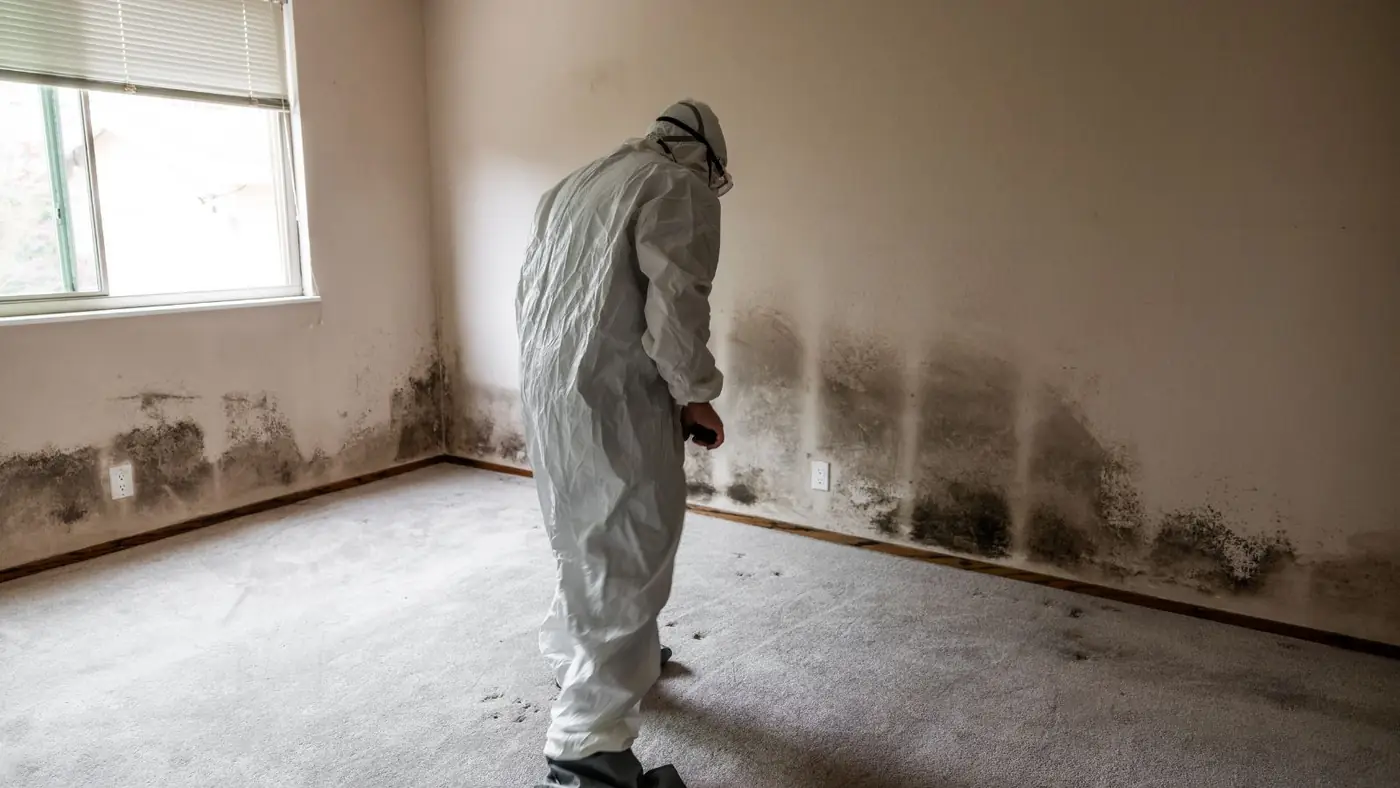
A musty smell after water damage in Broomfield, CO usually means something in the building is still damp, even if the room looks and feels dry. Odor is a clue about location, not a diagnosis. Finding the damp material and drying or removing it is what ends the smell.
Short answer: air fresheners and a fresh coat of paint hide a smell and leave the cause in place. EPA cleanup guidance points the other way: repair the water problem, dry everything and keep paint and caulk off moldy surfaces.
Where to lookSix Hiding Places for Moisture
Behind baseboards
Water that ran along the floor can wick into the bottom of the wall. Pull a short section of trim and look at the back of the drywall.
Under flooring
Carpet pad, laminate and floating floors can hold water against the subfloor long after the surface feels dry.
Closets and corners
Closed doors and outside walls limit airflow, so a small amount of moisture can linger there.
Inside walls
A wall cavity can stay wet behind intact paint. A moisture meter reads through the surface, and your nose cannot.
HVAC and ducts
A condensate line, a pan or wet insulation near a unit can carry odor through the whole house.
Stored boxes and fabric
Cardboard, books and upholstered pieces that got damp can smell on their own even when the structure is dry.
Why It Smells After It Looks Dry
Surfaces dry first. Materials with thickness, such as drywall, framing, padding and insulation, give moisture back slowly, and a closed room traps it. The air feels normal while the material underneath is still damp.
Spores are everywhere, indoors and out, and the CDC ties growth to moisture. So the useful question is where moisture remains, not how strong the smell is. A strong odor in one spot often points to where to start measuring.
A Sensible Order of Checks
- Confirm the water source is fixed, since a drip that continues keeps feeding the problem.
- Open closets and cabinets and let air move through them. Note which spot smells strongest.
- Look at the back of baseboards, the edges of carpet and the area around any appliance or tub.
- Check what is wet with a moisture meter. A homeowner can buy a simple one, and a restoration crew uses meters plus thermal imaging.
- Remove and dry anything small that is damp, such as boxes, rugs and stored fabric.
- If the smell stays after the area is dry and aired out, ask for a professional assessment.
Write down what you find as you go. Note the room, the spot, the date and what the meter read if you have one. Those notes help a restoration crew, and they help your insurer understand the loss. Insurers tend to treat an abrupt event differently from a slow leak, so check your policy for how yours is handled.
Smell won't go away?
Call and describe the room. We will explain what we would measure first.
What a Moisture Visit Looks Like
Talk it through
You describe the leak, when it happened and where the smell is strongest.
Scan and measure
Thermal imaging and moisture meters check walls, floors and ceilings, including areas you cannot see.
Open small
If a reading is high, a small opening at a baseboard or wall lets the crew look at the back of the material.
Explain the scope
You hear what is wet, what can dry in place and what must come out, and the price, before work starts.
Not every smell leads to a big job. Sometimes the answer is a damp box in a closet or a small spot behind a vanity. Measuring first keeps the work in proportion to the problem.
What Does Not Work
Covering a smell is not drying it
Air fresheners, scented candles and ozone gadgets change what you notice and do nothing about wet drywall or wood. Painting over a stain or a smelly patch seals the problem in. The EPA's guidance is to clean and dry moldy surfaces before anything goes over them.
- Fans pointed at a wall do not dry the inside of the wall.
- Closing the room off keeps the damp in.
- A smell that fades for a day and returns is a sign the source is still there.
When Drying, Testing or Removal Fits
If readings show a material is wet, drying comes first. Our crews use air movers, LGR dehumidifiers and HEPA air filtration to dry the space and clean the air. Wet drywall, pad or insulation that cannot be dried gets removed.
Mold testing can answer a narrow question, but it does not replace fixing the moisture. The CDC says the species does not change how mold is removed, and that mold found in buildings should be removed. Health questions belong with your physician.
Visible growth under about 10 square feet is, in the EPA's view, usually a homeowner job. Larger growth or significant water damage calls for more careful remediation, and our mold remediation work uses containment barriers and negative air machines for that.
Broomfield note: Heating Season Hides Damp Rooms
NWS Denver/Boulder data puts the average first freeze at October 7 and the last at May 5, with the first measurable snow in mid-October and the last in late April. Between those dates most households keep windows shut and the heat running, so a damp room gets little fresh air. Open closet doors, move furniture a few inches off exterior walls and check the corners of rooms that sit against the cold side of the house.
The city's Water Utilities page also ties cold winters to frozen, burst pipes. A small, slow leak from a pipe in a cold wall can begin quietly. If a smell shows up in winter, check under sinks and along exterior walls, and shut off the water at the main if you find active dripping.
Electrical and sewage warnings
Wet outlets, a wet panel or wet appliances, or any sewage, call for the utility or 911 first if there is electrical or gas risk. Keep fans out of a wet electrical area.
Who Handles What
We dry the structure and clean the area, and our water damage cleanup team handles contents and surfaces. A source that is still leaking needs a plumber first, since plumbing is not our trade. We also answer calls from Louisville and Lafayette, and our home market in Broomfield includes 80020, 80021 and 80023.
Surface cleaning does not reach water held inside drywall, padding or framing. Those materials give moisture back slowly. A meter reading will show whether anything is still wet.
No. Paint over damp material traps the problem and often fails, and the EPA wants moldy surfaces cleaned and dried before anything covers them.
Not always. A test cannot replace fixing the moisture, and CDC guidance says the species does not change how mold is removed. Ask a restoration company what a test would answer in your situation.
That is a question for your physician. Reactions vary, and the CDC notes that some people, including those with asthma or a mold allergy, can be affected more. We focus on finding and drying the moisture.
Climate data shows a long heating season, with an average first freeze on October 7 and an average last freeze on May 5. In those months windows stay shut and air moves less, so a damp corner can hold moisture longer. Open closet doors and check exterior walls if a smell appears.
Water or mold in your home right now?
Call the 24/7 line and describe what you see. We explain scope and price before work starts.