
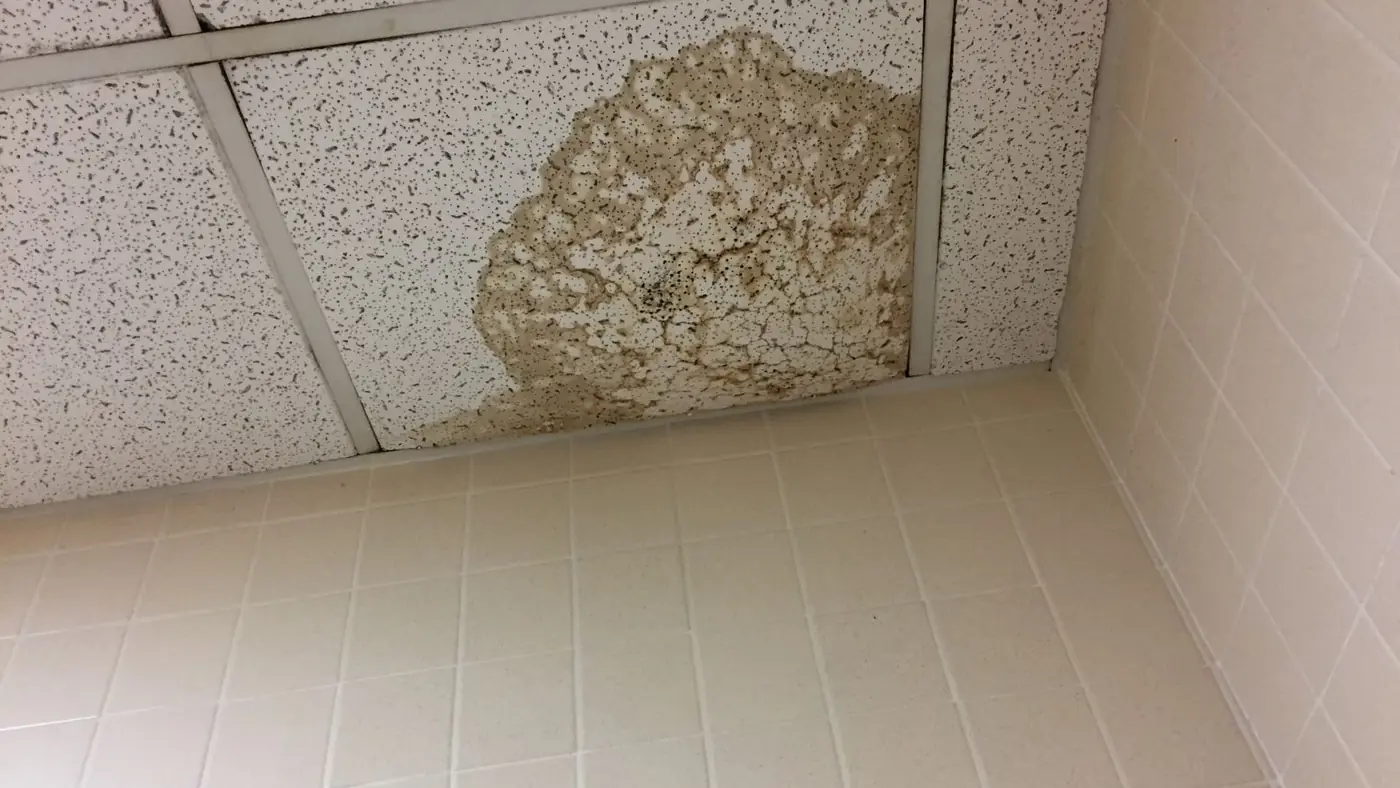
An old ceiling water stain is a dry mark left by water that has stopped, while an active stain is one that is still being fed by a leak. In Broomfield, CO the two can look nearly the same from the floor. The difference shows up in texture, in timing and in what a moisture meter reads.
Short answer: a stain that stays the same size, feels hard and reads dry is probably old. A stain that grows, feels soft, darkens after rain, snowmelt or a shower, or reads wet is active, and the source needs finding.
CluesWhat the Stain Itself Can Tell You
Signs the stain is probably old
- The edges are crisp and dried, often with a darker ring where the water stopped spreading.
- The paint is firm and flat, with no bubbling and no soft spots.
- The mark has stayed the same size for months and does not change after a shower or a storm.
- A moisture meter reads the same as the dry ceiling nearby.
Signs the stain is probably active
- The stain is wider than it was last week, or a second ring has formed outside the first.
- The paint bubbles, peels or feels cool, damp or soft when pressed lightly.
- The ceiling drips, sags or shows a brownish tint that looks fresh.
- A meter reads higher in the stain than elsewhere, and the number rises after rain or after someone uses the shower above.
Rings are a clue, not a clock. A ring can mean water arrived in more than one wave, but it cannot tell you when the last wave was. Treat a stain with multiple rings as a reason to check, not as proof of an old leak.
A Simple Way to Test It at Home
- Trace the stain with a pencil and write the date next to the line.
- Photograph it in the same light each time, with a tape measure or coin for scale.
- Check again after the next heavy snowfall or melt, rain or shower use on the floor above.
- Press gently on the edge with a gloved finger. Soft, spongy or cool drywall points to moisture.
- If you own a moisture meter, take readings on the stain and on dry ceiling a few feet away.
Give the test enough time to include weather or water use that would reveal a leak. A stain that never changes through that test is probably old. A stain that moves needs a professional look.
Stain still growing?
Call and describe it. We will explain how we would measure and what the scope could be.
How a Restoration Crew Reads a Stain
A professional visit adds tools that your eyes and fingers cannot match. The goal is to learn whether the ceiling is wet now, how far the moisture reaches and where it enters. Each reading takes only moments, and the combined picture is far more reliable than a guess.
Meter the stain
A moisture meter compares the stain to dry ceiling nearby and to the wall below.
Scan with thermal imaging
A thermal camera can show cooler damp patches that run beyond the visible mark.
Check above
The room or attic above the stain is checked for wet insulation, fittings and fixtures.
Open if needed
A small cut lets the crew see the back of the drywall and the insulation before any larger decision.
The result is a plain answer to the question you started with. The stain is either dry and cosmetic, or wet and part of a larger path of water. Either answer lets you plan the next step with real numbers.
Where the Water Could Be Coming From
Roof or flashing
Snow, ice and melt can send water past a weak spot at a chimney, vent or valley. The stain often appears away from the actual entry point.
Bathroom above
A tub seal, drain line, toilet connection or supply valve can drip only when it is used.
Plumbing in the ceiling
A pinhole in a pipe or a loose fitting can leak steadily and keep the stain damp.
HVAC condensate
A clogged condensate line or pan near a unit can leak in the cooling season and go quiet in winter.
Notice that several of these leaks come and go. That is why a dry-looking stain is not always an old one. Water that returns only with a storm or a shower can leave a ceiling looking fine for days.
Broomfield note: Snow, Melt and Home Age
NWS Denver/Boulder data gives Broomfield's area an average seasonal snowfall of 56.9 inches, with first measurable snow around October 19 and the last around April 28. That means roof snow and melt can test a ceiling for months. Check the stain after a thaw, and look in the attic or upper floor for damp insulation if you can do so safely.
Broomfield's housing spans Broomfield Heights, which began in 1955, through Anthem, Anthem Highlands and Arista, built from 2001 to 2012. Homes of different ages tend to fail in different typical places, and a plumber or inspector can tell you what your specific house has. Ask one to look at the line or roof section above the stain before you repaint.
Sagging ceilings and light fixtures
If the ceiling is sagging, bulging or dripping near a light fixture or fan, turn off power only if you can do so safely, stay out of the room and the utility or 911 handles any electrical risk before we do. A wet ceiling can fall without warning.
What to Do Either Way
Whatever the stain turns out to be, do not leave the question open. A leak that returns each winter can wet the same insulation again and again. An hour spent tracking the stain now costs far less than a ceiling that finally gives way.
If the stain seems old
Confirm it with a reading, then repair the cosmetic damage. A stain-blocking primer and paint can restore the look once the drywall is dry and sound. Do not paint over a spot you have not measured, since a hidden leak will lift the new paint.
If the stain seems active
Find and stop the source first, which may take a plumber or a roofer. Our crews handle the drying and the rebuild, and plumbing and waterproofing sit outside our work. For a ceiling that is wet or sagging, our ceiling repair crews cut out the damaged section and our mitigation team dries the cavity so the patch is not applied over damp material.
We respond to calls in Westminster and Erie as well as Broomfield, CO. Keep photos of the stain from the first day. Your insurer may ask for them, and a one-time burst is often handled differently from a slow leak, so check your policy.
A dry, old stain usually does not keep growing without moisture. The CDC notes that mold grows where there is moisture, so a stain that stays wet is the concern. If you see growth, ask a restoration company to assess it.
Only after the area reads dry and the cause is found. Use a stain-blocking primer so the mark does not show through. Painting a damp ceiling traps the problem.
Roof leaks often show up after rain or snowmelt, while plumbing leaks follow shower, sink or appliance use. Note when the stain changes. A plumber or roofer can confirm the source.
The city's water utilities department runs the public water and sewer systems, not plumbing inside your home. It also keeps an after-hours line for urgent problems on its own system. A leak above your ceiling is for you, your plumber and your insurer to handle.
Not until you know whether it is changing. A stain can be fed slowly for a long time. Mark it, track it and check it with a meter.
Water or mold in your home right now?
Call the 24/7 line and describe what you see. We explain scope and price before work starts.